
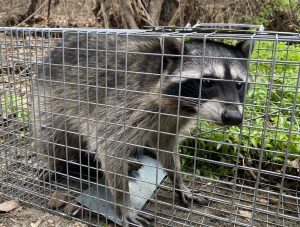
 When wildlife moves into your home or yard, knowing how to trap animals safely and humanely is essential. Trapping should always minimize stress and harm while ensuring the problem is resolved effectively. At District Wildlife Solutions, we specialize in humane animal trapping and removal, offering solutions that protect both your property and the animals themselves.
Types of Traps for Animals
There are several types of traps for animals, but not all are humane or legal. Lethal traps are available on the market, but we do not use them. Instead, we focus on live-capture traps designed for safe relocation.
Cage Traps
These are the most common and humane traps for medium-sized wildlife such as squirrels, raccoons, skunks, and opossums. Constructed of wire mesh, cage traps allow for ventilation and visibility, which reduces animal stress. A triggered door mechanism closes behind the animal once it enters. Placement near entry points, food sources, or travel paths increases success. For larger animals, sturdier cages with reinforced doors are recommended.
Box Traps
Box traps are enclosed and typically made of solid material, which keeps animals calm by limiting their line of sight once inside. They are especially useful for smaller wildlife like rabbits, chipmunks, or rats. Since the animal is not exposed on all sides, this type of trap reduces anxiety compared to wire cages. However, regular monitoring is crucial to avoid overheating or stress due to poor airflow.
Species-Specific Traps
Some traps are tailored for particular animals to ensure both effectiveness and safety. Examples include one-way doors for bats or exclusion funnels for squirrels that allow exit without reentry. Specialized raccoon traps may feature stronger springs and larger interiors, while bird-specific traps use gentle entry designs that prevent feather damage. Using the right trap for the species minimizes the chance of catching non-target animals and ensures a quicker, more humane capture.
Enclosure and Multi-Catch Traps
In some cases, multi-catch traps are used for rodents such as mice. These traps can capture several animals at once without harming them, making them effective for larger infestations. Similarly, larger enclosure traps can be set for groundhogs or feral cats, designed with extra space to reduce injury from struggling.
Humane Trapping Techniques
Responsible trapping techniques are as important as the trap itself. Proper baiting, correct placement, and regular monitoring are key to reducing animal stress. Traps must be checked frequently to prevent injury or prolonged captivity, and captured animals should always be released or relocated promptly and legally.
Humane Solutions from Start to Finish
Catching an animal is only part of the solution. We also offer the following services:
· Animal removal and relocation
· Dead animal removal if necessary
· Animal proofing to seal entry points
Call the Professionals
If you’re dealing with wildlife, don’t try to figure out how to trap animals on your own. Contact District Wildlife Solutions for safe, effective, and humane trapping in Washington D.C. and Maryland. We’ll remove the intruders, repair the damage, and help prevent future problems.